2. Which Low Bed Fits Your Excavator?
3. How to Buy a Low Bed Trailer in Ghana?
4. Why Does Low Bed Design Matter for Heavy Equipment?
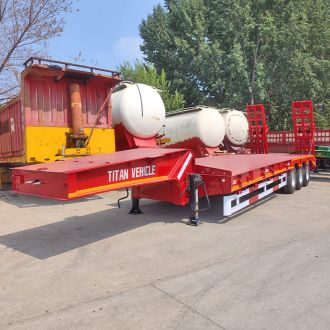
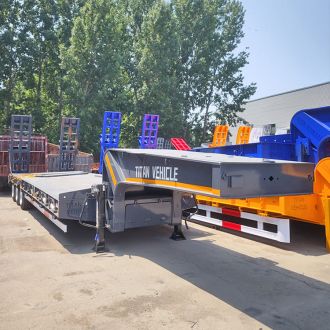
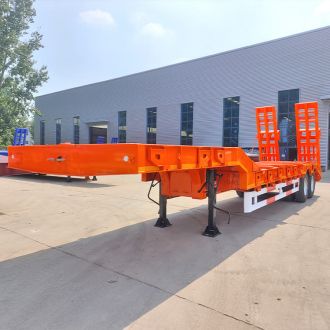
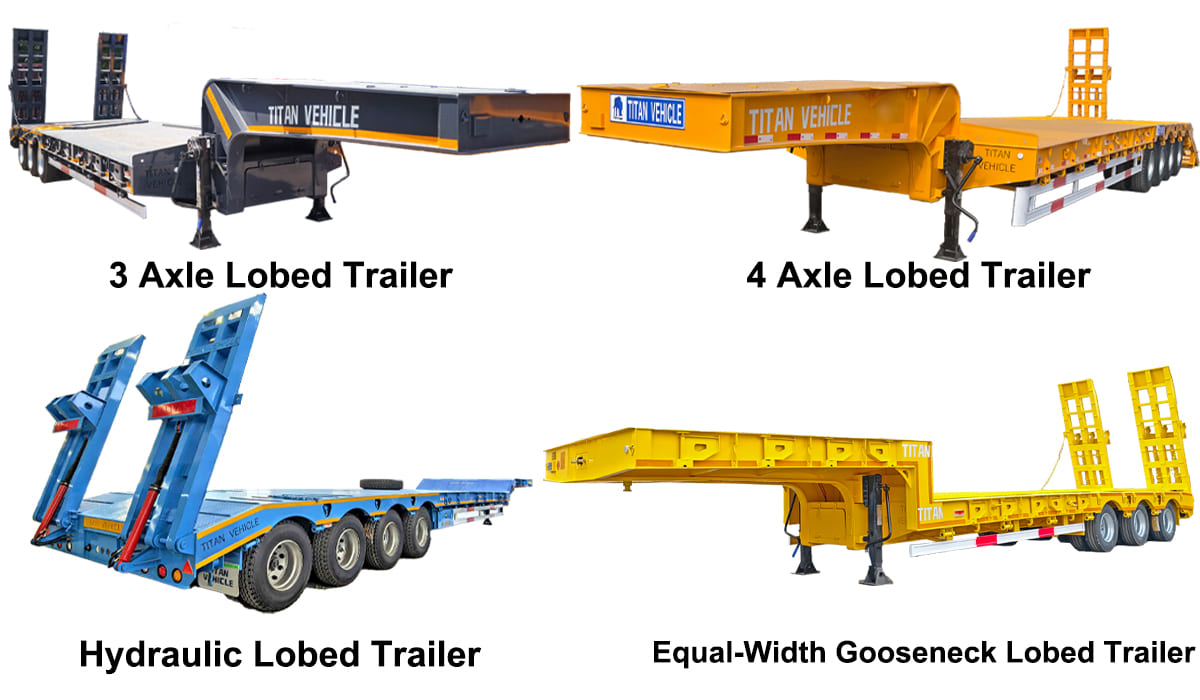
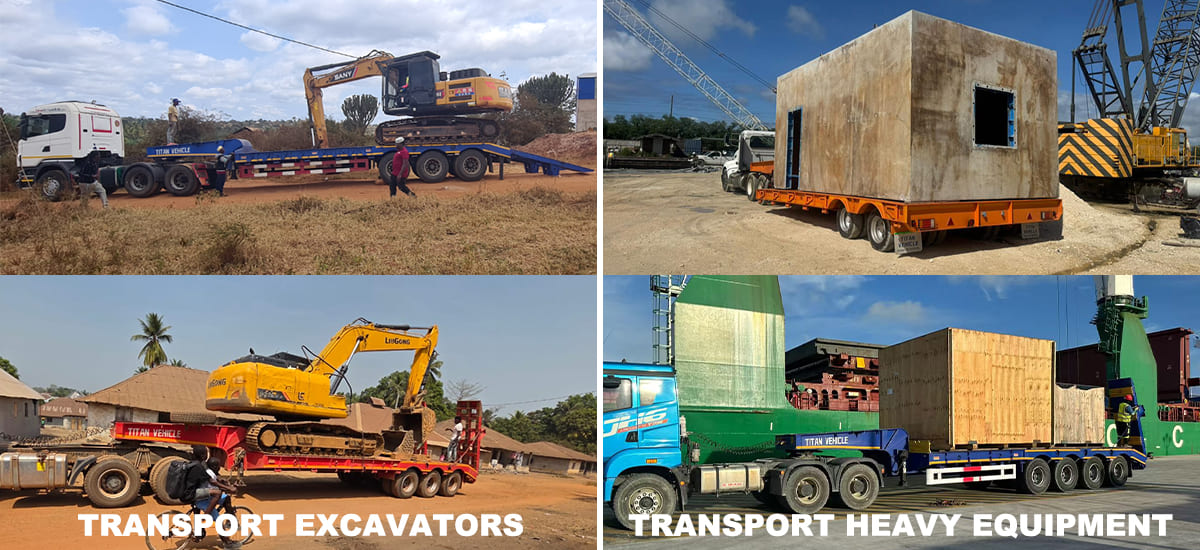
For excavator transportation in Ghana, the right low bed is determined by the machine being transported, not simply by the trailer's advertised tonnage. The supplied 3-axle 60-ton low bed is the direct match for the stated application of one 60-ton excavator or two 30-ton excavators, while the 4-axle 80-ton heavy low bed is the better choice when the equipment requires higher rated capacity or a longer working platform.
This distinction is important when looking for a low bed trailer truck for sale in Ghana because a higher capacity does not automatically make a trailer a better purchase. For a Ghanaian contractor, equipment owner, or heavy-haul operator, the buying process should therefore follow a practical order: identify the equipment, determine the required capacity and working space, understand the structural design, and then compare supplier quotations. This is also the most reliable way to evaluate low bed truck price, because a price has little meaning until the exact trailer specification behind it is clear.
A low bed trailer is a heavy-duty equipment trailer designed to carry heavy and often tall machinery on a relatively low cargo platform. Its main advantage is that it combines a machinery-friendly loading arrangement with a chassis designed for concentrated heavy loads.
1.1 Why Are Low Bed Trailers Used for Excavators?
Low bed trailers are used for excavators because excavators create a combination of weight, height, and loading requirements that a general-purpose trailer does not always address efficiently.
An excavator may weigh many tons while also having a tall upper structure, cab, boom, and other components that determine the overall transport profile. Putting that machine on a high cargo platform starts the load from a higher position. A low bed changes that starting point by placing the machine closer to the road.
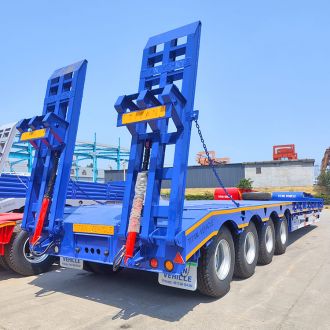
The supplied trailers have a stated cargo platform height of approximately 1.3 meters. The significance of that figure is not the number itself, but what it does to the complete transport combination. When the machine sits lower, the trailer is better aligned with the basic purpose of carrying tall construction equipment.
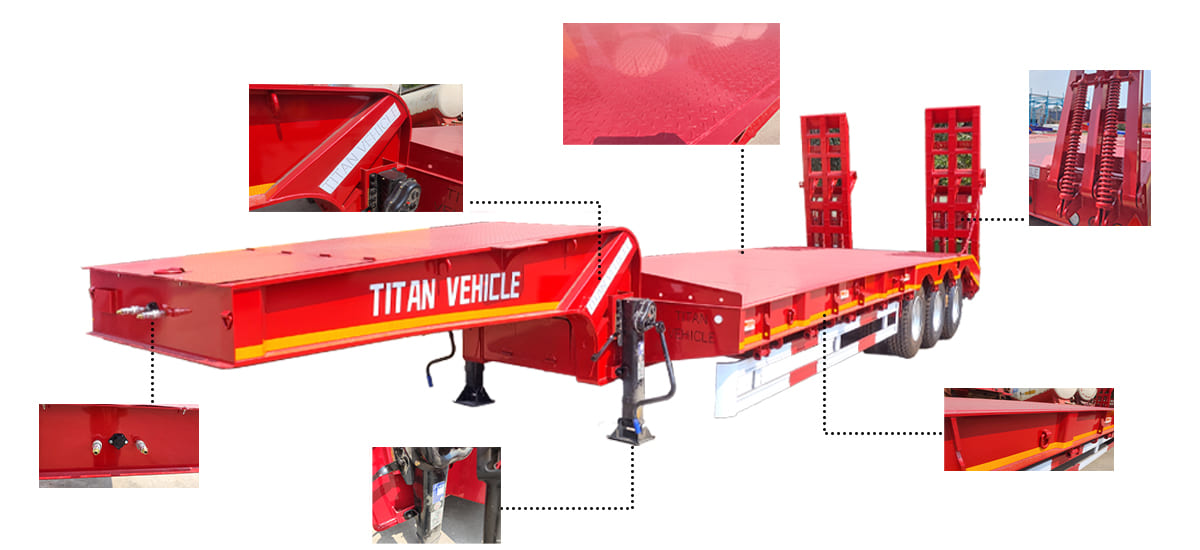
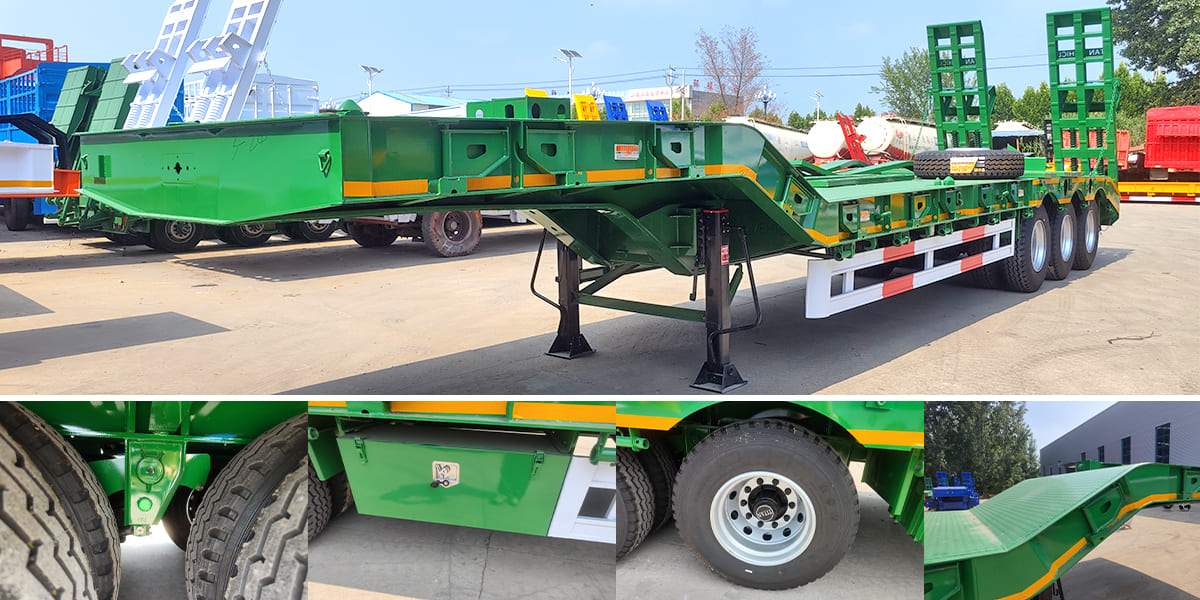
Lowbeds also need to accommodate the loading process. Excavators generally drive onto a trailer, which means the rear loading system is part of the trailer's core function. Both supplied configurations use double-spring loading ramps with a high-strength box-type structure and four vertical reinforcing members. The specified arrangement allows one worker to raise and lower the ramps.
For a contractor moving equipment between projects in Ghana, this makes the low bed more than a reinforced platform. It becomes a dedicated piece of equipment for loading, supporting, and transporting machinery.
 Low Bed Trailer Truck for Sale in Ghana: Price & Buying Guide
1.2 What Is the Difference Between a Lowbed and a Flatbed?
A lowbed is primarily designed around heavy-equipment transportation and a low cargo position, while a flatbed is a more general-purpose open trailer.
A flatbed is useful when cargo can be loaded and transported without requiring a particularly low deck. Its open structure makes it suitable for a wide range of general cargo. A lowbed is more specialized because its design takes into account the height and concentrated weight of machinery.
The difference becomes important when the cargo is an excavator. A buyer should not ask only whether the excavator weighs less than the trailer's rated capacity. The more useful questions are whether the machine can be loaded safely, whether it has enough working space, and whether its final position on the trailer is appropriate.
That is why a lowbed is often the more logical equipment trailer for a company whose core business is transporting excavators and other heavy construction machinery.
For a Ghanaian business handling a mixed cargo fleet, a flatbed may provide broader general-purpose flexibility. For a machinery transport operation, however, the dedicated lowbed configuration can better match the actual job.
1.3 What Makes a Low Bed Different From Simply a High-Capacity Trailer?
A high-capacity trailer and a lowbed do not solve exactly the same problem.
Payload capacity answers the question, “How much weight can the trailer be designed to carry?” A lowbed adds another question: “How does that equipment sit on the trailer, and how does it get onto the trailer?”
That second question is critical for excavators.
A heavy machine needs more than a strong frame. It needs a usable deck, an appropriate loading angle, suitable ramps, and a structure that can handle concentrated loads. The low platform is therefore part of the trailer's function, not simply a dimensional feature.
For this reason, a buyer searching for a low bed trailer truck for sale in Ghana should compare equipment-specific design rather than treating all heavy-duty trailers as equivalent.
1.4 Why Does Deck Height Matter?
Deck height matters because it determines how high the machine starts above the road.
The supplied models have a stated cargo platform height of approximately 1.3 meters. For a tall excavator, this lower starting position is one of the main reasons to use a lowbed.
The practical effect is straightforward. The trailer cannot make an excavator physically shorter, but it can position the machine lower. That makes deck height an important consideration when the equipment itself has substantial vertical dimensions.
The key point for buyers is that deck height should be evaluated together with the equipment. The lower deck is useful because of the type of machine being transported, not because a lower number is automatically better for every cargo application.
1.5 Why Does the Loading Ramp Matter?
A heavy-equipment trailer must work before the load is on the road. The machine has to enter the trailer, reach the working deck, and later leave it again.
The supplied double-spring ramps are made using high-strength plate in a box-type structure with four vertical reinforcing members. The specified design allows one worker to raise and lower the ramps.
That feature has practical meaning for equipment operators because loading and unloading are repeated parts of the working cycle. A trailer that is structurally strong but cumbersome to load can be less useful in daily operation than its specification sheet suggests.
The working deck uses 5 mm patterned steel plate, providing the surface on which the machinery is positioned.
For a Ghanaian contractor, this loading system should therefore be viewed as part of the equipment transport solution, not merely as an accessory attached to the rear of the trailer.
The 60-ton and 80-ton models should be viewed as two different transport solutions. The 60-ton configuration is the direct choice for the stated 60-ton-class excavator applications, while the 80-ton configuration becomes more appropriate when heavier equipment or additional working space is required.
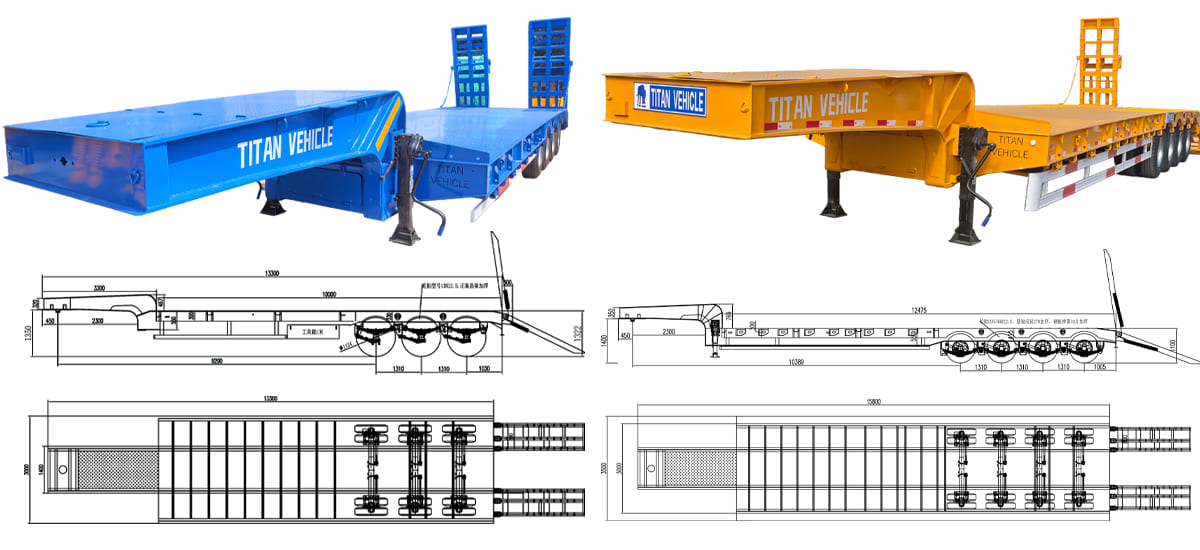
| Feature | 3-Axle 60-Ton Low Bed | 4-Axle 80-Ton Heavy Low Bed |
|---|---|---|
| Rated load capacity | 60 tons | 80 tons |
| Overall dimensions | 13,000 × 3,000 × 1,700 mm | 15,800 × 3,000 × 1,700 mm |
| Working platform | 9–9.5 m | 11.8 m |
| Maximum working platform | 9.5 m | 12.8 m |
| Stated cargo platform height | Approx. 1.3 m | |
| Main beam height | 500 mm | 550 mm |
| Upper flange | 20 mm × 200 mm | |
| Lower flange | 20 mm × 200 mm | |
| Web thickness | 12 mm | 14 mm |
| Main beam material | Q460C / HG60 high-strength manganese steel | |
| Side beam | 300 × 140 mm manganese-steel I-beam | |
| Axle configuration | 3 × 16-ton TITAN axles | 4 × 13-ton TITAN axles |
| Tires | 12 × 12R22.5 | 16 × 12R22.5 |
| Self-weight | Approx. 10 tons | Approx. 13.3 tons |
| Supplied application reference | 2 × 30-ton excavators or 1 × 60-ton excavator | Heavy equipment requiring up to 80-ton rated capacity |
2.1 How Should a Buyer Decide Between 60 Tons and 80 Tons?
The most reliable decision rule is simple: choose the smallest configuration that fully matches the equipment you actually need to transport, unless the larger configuration provides a clear operational advantage.
The 60-ton model is directly suited to one 60-ton excavator or two 30-ton excavators when a 9–9.5-meter working platform is sufficient. The 80-ton model makes more sense when the equipment approaches the 80-ton rating, when a longer working deck is required, or when the operator expects to transport larger machinery on a regular basis. This avoids two common purchasing mistakes.
The first is under-specification: choosing a trailer based only on a low purchase price and discovering that the equipment requires more capacity or deck space. The second is over-specification: choosing an 80-ton trailer simply because it has a higher rating even though the operator's regular equipment fits comfortably within the 60-ton configuration.
2.2 Why Is the Working Platform as Important as Payload?
Payload tells you the trailer's rated load class. Working platform length determines whether the equipment can actually be positioned appropriately. The difference between 9–9.5 meters and 11.8–12.8 meters is therefore meaningful when comparing these two models.
A machine may weigh less than 60 tons but still require more platform space than the smaller trailer provides. Conversely, a machine that fits comfortably within the shorter deck may not justify the larger trailer. This is why a professional quotation should identify usable working platform length rather than relying only on overall trailer dimensions. For machinery transport, the dimensions of the cargo and the dimensions of the working area must be evaluated together.
2.3 Why Is the 60-Ton vs 80-Ton Difference More Than Capacity?
The two models represent different engineering balances.
The 60-ton model combines a shorter working platform, three axles, twelve tires, a 500 mm main beam, and approximately 10 tons of self-weight. The 80-ton model combines a longer working platform, four axles, sixteen tires, a 550 mm main beam, and approximately 13.3 tons of self-weight.
The important insight is not that one set of numbers is larger. It is that each configuration has been built around a different transport requirement. That distinction is useful when evaluating a low bed truck because it prevents a buyer from treating capacity as the only measure of value.
 Low Bed Trailer Truck for Sale in Ghana: Price & Buying Guide
A good purchase decision starts with the equipment requirement and ends with a specification-based quotation comparison. For a Ghanaian buyer, the trailer should be selected according to the machines being transported, the required deck space, and the working conditions of the transport business before the supplier's price is evaluated.
3.1 What Information Should Be Defined Before Requesting a Price?
The first information should describe the cargo rather than the trailer.
The supplier should know the approximate machine weight, the machine dimensions, whether one or multiple machines will be transported, and the required working platform.
For the supplied products, the distinction is already clear. The 60-ton model is designed around one 60-ton excavator or two 30-ton excavators. The 80-ton configuration is intended for heavier equipment and provides a considerably longer working platform.
Once the equipment requirement is established, the trailer specification becomes easier to define.
This approach is more useful than asking a supplier for a generic “heavy lowbed” because it gives the manufacturer a clear engineering target.
3.2 Which Specifications Should Be Written Into the Quotation?
A serious quotation should clearly state the rated capacity, overall dimensions, working platform length, cargo platform height, main beam structure, material, axle configuration, tire size and quantity, suspension, loading ramps, self-weight, and included accessories.
The purpose is not to create a long technical document for its own sake. It is to make sure the quoted products are actually comparable.
For example, the phrase “60-ton lowbed” does not tell a buyer whether two suppliers are offering the same beam design, deck length, running gear, or ramp configuration.
A specification-based quotation removes that ambiguity.
For a customer looking for a low bed trailer truck for sale in Ghana, this is especially useful when comparing direct-factory suppliers. The buyer can evaluate the engineering content of each quotation rather than making a decision based on photographs or headline pricing.
3.3 Why Should Working Length and Overall Length Be Separated?
Overall length describes the complete trailer. Working platform length describes the section that actually supports the equipment.
For the supplied configurations, the 60-ton trailer has an overall length of 13,000 mm but a working platform of 9–9.5 meters. The 80-ton model has an overall length of 15,800 mm with an 11.8-meter working platform and a maximum of 12.8 meters.
3.4 What Should Be Checked About the Trailer's Structural Design?
The main beam specification should be clearly stated because the beam is a major part of the trailer's load-bearing structure.
The 60-ton model uses a 500 mm-high beam with 20 mm × 200 mm upper and lower flanges and a 12 mm web. The 80-ton model uses a 550 mm-high beam with the same flange dimensions but a 14 mm web.
Both use Q460C/HG60 high-strength manganese steel for the main beam.
A buyer should also review the side structure, reinforcement, suspension, and axle arrangement. These components determine how the load moves through the complete trailer.
The value of a detailed structural specification is that it allows objective comparison. A manufacturer can describe a trailer as “heavy duty,” but the actual beam, steel, axle, and suspension data show what that description means.
3.5 Why Should the Loading System Be Part of the Purchase Decision?
The trailer has to be practical before and after transportation, not only while the equipment is already loaded.
Both supplied models use double-spring ramps with a reinforced box-type structure and four vertical members. The design allows one worker to raise and lower the ramps.
That matters for a fleet that loads and unloads equipment repeatedly.
The floor is made from 5 mm patterned steel plate, which provides the working surface for the machinery.
For a Ghanaian contractor, loading convenience can be an important part of productivity. A trailer that is difficult to load may create operational friction even when its payload and chassis specification are appropriate.
 Low Bed Trailer Truck for Sale in Ghana: Price & Buying Guide
3.6 What Affects Low Bed Truck Price?
The low bed truck price depends on the exact product configuration.
Capacity is one factor, but it is not the only one. Trailer size, working platform length, structural steel, main beam dimensions, axle arrangement, tire quantity, suspension, loading ramps, accessories, and self-weight all contribute to the specification being purchased.
That is why an 80-ton trailer should not simply be compared against a 60-ton trailer by saying, “This one is more expensive because it carries more.”
The 80-ton model is also physically larger, has a longer working platform, uses four axles rather than three, has more tires, and weighs more.
The price therefore needs to be interpreted in relation to the complete equipment package.
3.7 How Should Two Supplier Quotations Be Compared?
The most useful method is a like-for-like technical comparison. If one supplier offers a shorter 60-ton trailer and another offers an 80-ton trailer with a much longer platform, the two quotations do not represent equivalent products. The comparison should instead establish whether both offers provide the same:
Once the products are technically comparable, the price difference becomes much easier to interpret. This approach also helps identify why one supplier may quote a lower low bed truck price. The difference may come from the specification rather than from the manufacturer's margin alone.
3.8 When Is a Lower Price Actually Better?
A lower price is better when the trailer still provides the required specification and the products being compared are genuinely equivalent.
A cheaper 60-ton trailer may not be a better choice if the operator actually needs the longer working platform of the 80-ton model.
Similarly, an 80-ton trailer is not necessarily better value if the business's regular equipment fits comfortably within the 60-ton configuration.
For a Ghanaian B2B buyer, value therefore comes from matching the trailer to the operation.
The most economical trailer is not necessarily the one with the lowest invoice. It is the one that provides the required capability without unnecessary specification.
3.9 What Should a Ghanaian Buyer Ask the Manufacturer?
A technically useful discussion with a manufacturer should begin with the intended machinery.
The customer can explain the equipment weight and dimensions and ask the manufacturer to recommend the appropriate lowbed configuration. The resulting quotation should then identify the actual structural and running-gear specification.
This creates a much more useful conversation than asking only for a catalog or product price.
The manufacturer should be able to explain why a particular capacity, deck length, axle arrangement, and frame configuration fits the intended machinery.
For direct sourcing into Ghana, this type of technical communication can also reduce misunderstandings about what is included in the final product.
3.10 What Is the Most Practical Buying Strategy?
The simplest strategy is:
Define the machine → define the required deck → define the capacity → verify the structure → compare quotations.
For one 60-ton excavator or two 30-ton excavators, the supplied 60-ton configuration provides a direct application match.
For heavier equipment or equipment requiring a longer working platform, the 80-ton configuration becomes more appropriate.
The final commercial decision should then consider the full specification rather than the low bed truck price alone.
This process is particularly important for a company buying its first heavy-equipment trailer because the wrong specification can create a much larger problem than a small difference in purchase price.
 Low Bed Trailer Truck for Sale in Ghana: Price & Buying Guide
A low bed's performance comes from the interaction of its structure, material, load distribution, suspension, deck, and loading system. These features matter because heavy equipment creates different forces from ordinary general cargo, so a trailer designed for excavator transportation must be engineered as a complete load-carrying system.
4.1 Why Does Heavy Equipment Create Different Loads?
Heavy machinery does not behave like a uniformly distributed stack of cargo.
An excavator transfers its weight through specific contact areas, particularly its tracks or wheels. The machine can also shift forces through its upper structure and chassis during loading and movement.
That means the trailer deck and frame need to deal with concentrated loads rather than simply supporting an evenly spread weight.
This is one reason low bed design cannot be reduced to a single payload number. Two trailers may have the same nominal capacity but use different structural approaches to carry that load.
For a buyer, this is also why technical specifications such as beam geometry, steel material, reinforcement, suspension, and axle arrangement are more meaningful when considered together.
4.2 Why Do Strength and Toughness Both Matter?
High strength is important because the structural members need to support heavy loads. Toughness and fatigue resistance are also relevant because the trailer operates under repeated movement rather than remaining stationary.
The supplied main-beam material is Q460C high-strength manganese steel, also referred to as HG60 steel, and is specified for strength, toughness, and fatigue resistance.
The important point is that the steel grade should not be treated as a marketing phrase by itself. Material characteristics become useful only when combined with an appropriate structural design.
A heavy equipment trailer needs the right relationship between material, beam geometry, reinforcement, welding, suspension, and load distribution.
That is why a technically informed buyer should ask not only, “What steel do you use?” but also, “How is that steel used in the chassis?”
4.3 Why Does Load Distribution Matter?
Load distribution explains why different heavy lowbeds can use different axle arrangements.
The supplied 60-ton model uses three 16-ton axles, while the 80-ton model uses four 13-ton axles. The larger trailer therefore does not simply increase every component's individual rating.
Instead, the complete system uses a different distribution of load through the axle group and tire arrangement.
This is important because it teaches a useful purchasing principle: the trailer's rated capacity should be evaluated as a system rather than inferred from any one component.
The frame carries the load into the suspension. The suspension transfers forces into the axle system. The axles and tires then transmit those forces toward the road.
A technically suitable trailer is one in which these components are designed to work together.
4.4 Why Is Suspension Part of Structural Performance?
Suspension is sometimes treated as a running-gear detail, but it has a direct relationship with how the loaded trailer behaves on the road.
Heavy equipment places significant static weight on the chassis, while road movement creates additional dynamic forces.
The supplied trailers therefore use reinforced leaf-spring suspension rather than treating the suspension as a minor accessory.
For the buyer, the practical lesson is simple: a heavy-duty trailer should be evaluated not only by its main beam but by the complete path through which the load is transferred.
A strong frame combined with an unsuitable running-gear specification would not represent a complete heavy-equipment solution.
4.5 Why Is the Deck More Than a Platform?
The deck is the interface between the machine and the trailer.
The supplied models use 5 mm patterned steel plate for the working surface. The deck must support the machinery while providing a practical area for positioning it after loading.
This is why working platform length matters as much as payload for many equipment operators.
The machine needs enough space to sit in a suitable position. A trailer can have sufficient rated weight and still be a poor fit if the working area is not appropriate for the machine.
The deck should therefore be considered in relation to the machine's dimensions and load distribution rather than as a flat surface that is interchangeable between every trailer.
4.6 Why Does the Loading Process Affect the Trailer Design?
Loading is where the trailer first encounters the concentrated force of the machinery.
When an excavator climbs the ramps, the load is moving from ground level to the trailer deck. The loading system therefore needs to be integrated with the trailer's structural design.
The supplied double-spring ramps use a reinforced box-type structure with four vertical members. Their specified operation allows one worker to raise and lower them.
This design has both structural and practical significance.
Structurally, the ramp needs to support the equipment during the transition onto the trailer. Operationally, it needs to be manageable enough for regular loading and unloading.
For a machinery transport business, both aspects matter.
4.7 Why Does a Low Deck Improve the Equipment Transport Concept?
A lowbed works because the trailer itself becomes part of the machinery transport strategy.
The trailer cannot change the dimensions of the excavator, but it can determine how high that machine sits above the road. The stated cargo platform height of approximately 1.3 meters is therefore directly connected to the trailer's purpose.
This explains why a lowbed is more than a high-capacity flat trailer.
The engineering objective is to combine a low cargo position with a chassis capable of supporting heavy equipment and a loading arrangement that allows the machine to enter and leave the platform.
Those functions need to work together.
4.8 What Makes These Structural Features Relevant to a Ghanaian Buyer?
For a Ghanaian contractor or equipment transport company, the relevant question is not whether every structural specification sounds impressive. The relevant question is whether the complete trailer matches the actual work.
A contractor moving large excavators needs a chassis that can support concentrated loads, a deck that provides enough working space, a low cargo position, a suitable suspension and axle system, and a practical loading method.
That is the real reason the frame structure matters.
A low bed trailer truck for sale in Ghana should therefore be evaluated as a complete heavy-equipment transport system rather than a simple platform with a tonnage number.
The 60-ton and 80-ton configurations demonstrate this principle clearly. Their different capacities are supported by different combinations of platform length, frame structure, running gear, and overall trailer size.
The buyer does not need the largest specification by default. The buyer needs the specification that corresponds to the equipment and the operating requirement.
 Low Bed Trailer Truck for Sale in Ghana: Price & Buying Guide
5.1 What Is the Difference Between a Lowbed and a Flatbed?
A lowbed is designed mainly for heavy equipment and places the cargo on a lower working platform, while a flatbed is a more general-purpose open trailer. The low platform and dedicated ramps make a lowbed particularly suitable for excavators and other tall machinery.
5.2 How Long Is a Low Bed Trailer?
The supplied 60-ton model has an overall length of 13,000 mm and a working platform of 9–9.5 meters. The 80-ton model has an overall length of 15,800 mm, with an 11.8-meter working platform that can reach 12.8 meters.
5.3 How Much Weight Can a Low Bed Trailer Haul?
The supplied 3-axle configuration is rated at 60 tons, while the 4-axle heavy-duty configuration is rated at 80 tons. The appropriate choice depends on both the equipment weight and its physical dimensions.
5.4 What Is the Deck Height of a Low Bed Trailer?
The stated cargo platform height for both supplied models is approximately 1.3 meters. The low cargo position is one of the main reasons lowbeds are used for tall and heavy machinery.
5.5 What Are Lowbed Trailers Used For?
Lowbed trailers are primarily used for transporting heavy machinery and construction equipment. The supplied 60-ton configuration is specifically matched to one 60-ton excavator or two 30-ton excavators.
5.6 What Is the Low Bed Truck Price in Ghana?
There is no single price because the quotation depends on the trailer's capacity, dimensions, structural design, axles, tires, suspension, ramps, accessories, and other specifications. The most meaningful comparison is therefore between equivalent technical configurations.
5.7 Should I Buy a 60-Ton or 80-Ton Low Bed?
Choose the 60-ton model when the main application is one 60-ton excavator or two 30-ton excavators and the available working platform is sufficient. Choose the 80-ton model when the operation requires higher capacity or a longer working platform.
Add: Nii Nortei Nyanchi St, Accra, Ghana
Marketing Manager: Hitomi Zhang
Mobile: 8615853176773