
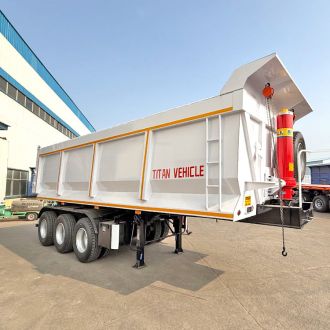
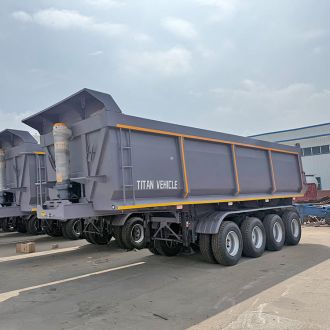
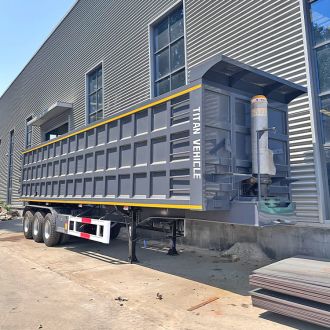
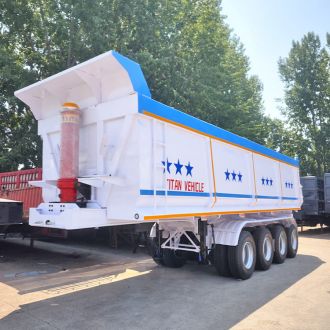
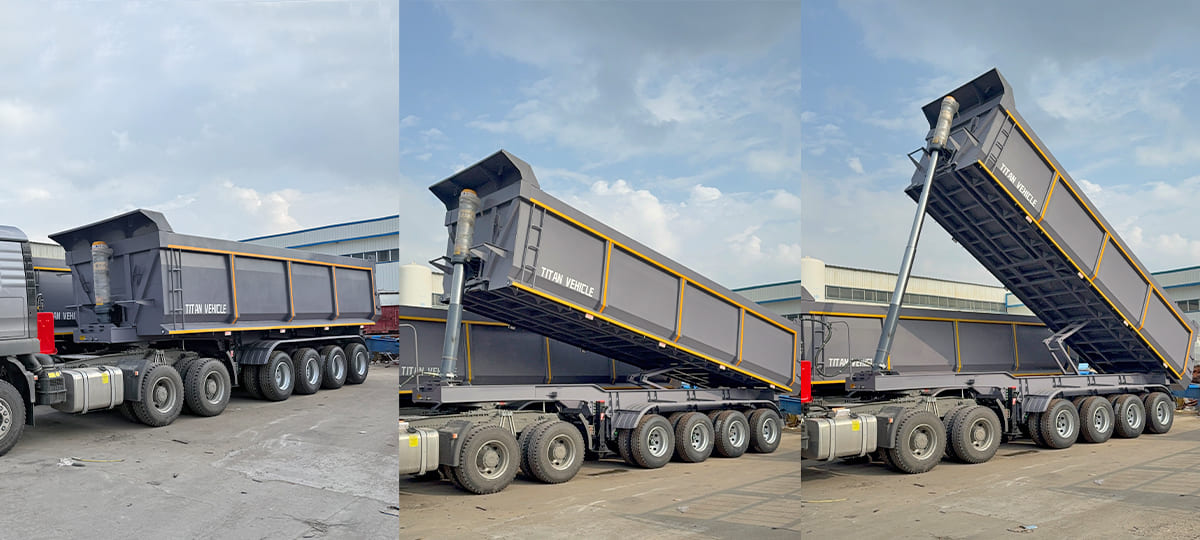
An end dump truck trailer is a semi-trailer designed to transport bulk materials and unload them from the rear by hydraulically lifting the body from the front. For buyers searching for a dump trailer for sale in Ghana, the main purchasing decision is not simply whether the trailer has a larger body or a higher payload. The more important question is which combination of body volume, rated payload, body structure, dimensions, material and hydraulic configuration matches the intended transport work.
A dump trailer can be advertised under a similar commercial name while still having a different technical configuration. For example, one configuration may provide a 35 m³ body with a 60-ton rated payload, while another 35 m³ configuration is rated at 80 tons. A different dump truck trailer may also carry 60 tons while using another body structure and material. This is why a buyer should treat the product name as the starting point of the search rather than the final purchasing specification.
For buyers in Ghana, this distinction becomes particularly useful during B2B procurement. When a buyer contacts a trailer manufacturer, exporter or distributor, the quotation should correspond to a clearly defined product. Instead of asking only for a dump trailer for sale, the buyer should identify the required payload, body volume, body structure, dimensions and other major specifications. This guide explains what an end dump truck is designed to do, how to choose a suitable configuration, which specifications deserve attention and how buyers in Ghana can request and compare quotations more effectively.
|
1. What an End Dump Trailer Is Designed to Do |
2. How to Choose the Right Configuration |
The fundamental purpose of an end dump truck trailer is straightforward: transport bulk materials and discharge them through the rear of the trailer by tipping the body.
That basic function creates several important purchasing requirements. The body needs sufficient cargo space, the rated payload needs to match the intended configuration, the body structure needs to meet the buyer's requirement and the hydraulic lifting system needs to correspond to the specified trailer.
For this reason, a dump trailer should be understood as a complete working configuration rather than simply a trailer body with a capacity number attached to it.
1.1 Rear unloading is the core function
An end dump truck differs from a flatbed trailer because its body is designed to be raised during unloading. The hydraulic system lifts the body, allowing bulk cargo to move toward the rear and leave the trailer.
This makes the tipping structure an essential part of the product. A buyer looking for a dump trailer for sale should therefore first confirm that the supplier is offering the required end-dumping arrangement rather than relying only on a general product title.
The products discussed in this guide all belong to the rear-dumping category. Their specific body configurations are different, but they share the same basic unloading concept.
From a procurement perspective, this means the buyer should first establish the required trailer type and then define the technical configuration around it.
1.2 Body volume and rated payload answer different questions
A dump truck trailer is commonly described using both cubic-meter capacity and rated payload, but these two figures represent different characteristics.
Body volume describes the available cargo space. Rated payload describes the load capacity stated for a particular configuration. Neither parameter can replace the other.
This distinction matters when a buyer is comparing a dump trailer for sale with other available models. A 35 m³ body does not by itself tell the buyer whether the configuration is rated for 60 tons or 80 tons. Likewise, a 60-ton rating does not tell the buyer whether the body is 35 m³ or 33 m³.
The correct approach is therefore to consider volume and payload separately. For buyers in Ghana, this is useful when sending product inquiries. Instead of writing only “35 m³ dump trailer,” a buyer can state the required payload as well. This reduces ambiguity and helps the supplier identify the intended configuration. The same principle applies when a buyer begins with the phrase end dump truck. The product category identifies the general type of equipment, but the actual purchase requires a complete technical description.
1.3 The hydraulic lifting system is part of the specification
The hydraulic lifting system is a critical component of an end dump truck because rear unloading depends on lifting the body.
The supplied product configurations include TITAN 196 and TITAN 214 hydraulic cylinders. Those cylinder models should remain visible in the technical quotation instead of being simplified to a general statement such as “hydraulic tipping system.”
A quotation for a dump trailer for sale should therefore identify the hydraulic configuration associated with the specific model. The available information does not provide hydraulic lifting force, lifting speed, operating cycle time or service life. Those values should not be assumed from the cylinder model alone. For procurement purposes, the important point is simply that the hydraulic cylinder is part of the product specification and should be confirmed before ordering.
For an international buyer in Ghana, clear hydraulic specifications can also make supplier communication more efficient. The buyer knows what is being requested, while the supplier can prepare a quotation against a defined configuration.
1.4 The product name should not replace the technical requirement
A buyer may begin with search terms such as dump trailer, dump trailer for sale, dump truck trailer or end dump truck. These phrases are useful for finding products, but they are not sufficient as a final purchase description.
A practical inquiry should identify the required rated payload, body volume, body structure, overall dimensions, internal dimensions, material and hydraulic cylinder configuration. This distinction is important because two suppliers can use the same product name while offering different technical specifications.
For buyers in Ghana, moving from a general keyword search to a specific technical inquiry makes the purchasing process clearer and reduces the possibility of receiving quotations for different products.
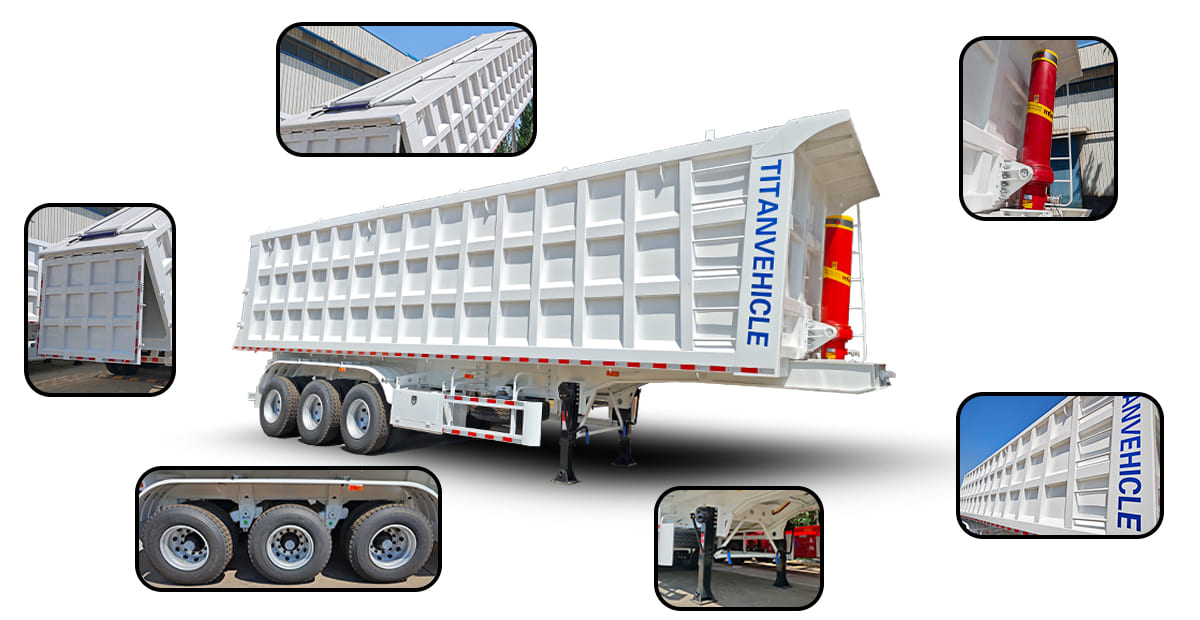 End Dump Truck Trailer for Sale in Ghana
The available products should not be treated as a simple ranking where one trailer is automatically better than another. Each represents a different combination of payload, body volume, body structure and technical specifications.
The purpose of comparison is therefore not to identify one universal “best” dump trailer. It is to identify the configuration that fits the buyer's actual requirement.
| Configuration | Rated Payload | Body Volume | Body Type | Body Material | Hydraulic Cylinder |
|---|---|---|---|---|---|
| 60-ton Grid-Style End Dump Trailer | 60 tons | 35 m³ | Grid-style | Q345B | TITAN 196 |
| 80-ton Grid-Style End Dump Trailer | 80 tons | 35 m³ | Grid-style | Q345B | TITAN 214 |
| 60-ton U-Shaped End Dump Trailer | 60 tons | 33 m³ | U-shaped | T700 | TITAN 196 |
This is the main section where the three configurations should be compared directly. Once the buyer has narrowed the choice, the rest of the purchasing process should focus on verifying the selected configuration rather than repeatedly comparing all three products.
2.1 The 60-ton, 35 m³ grid-style configuration
The first product is a three-axle, front-lifting rear-dumping trailer with a grid-style body. Its overall dimensions are 9000 × 2500 × 3950 mm. The body has internal dimensions of 8.3 × 2.37 × 1.8 m, a stated volume of 35 m³ and a rated payload of 60 tons. The body material is Q345B, and the hydraulic lifting system uses a TITAN 196 hydraulic cylinder.
For a buyer whose requirement is specifically centered on a 60-ton payload and 35 m³ grid-style body, this configuration provides a direct technical reference. The value of these specifications is that they define the actual product rather than simply identifying it as a dump trailer for sale.
A quotation can use these details to establish what is being supplied, including the payload, body volume, dimensions, material and hydraulic cylinder.
2.2 The 80-ton, 35 m³ grid-style configuration
The second product is also a three-axle, front-lifting rear-dumping trailer with a grid-style body. Its overall dimensions are 9000 × 2500 × 4000 mm. The internal body dimensions are 8.3 × 2.37 × 1.8 m, and the stated body volume is 35 m³. The rated payload is 80 tons, the body material is Q345B and the hydraulic cylinder is a TITAN 214 model. The supplied product information also identifies this configuration as suitable for adverse road conditions.
For a buyer who needs an 80-ton rated configuration, the payload requirement should be stated clearly when requesting a dump trailer for sale. Simply asking for a 35 m³ body would not fully define the product because body volume alone does not establish the rated payload.
This illustrates an important point in B2B trailer procurement: the buyer should identify the specification that matters most to the application rather than assume that one headline number defines the entire product.
2.3 The 60-ton U-shaped configuration
The third product is a three-axle U-shaped rear-dump trailer.
Its overall dimensions are 9300 × 2500 × 3700 mm. The body has internal dimensions of 8.8 × 2.37 × 1.6 m, a stated volume of 33 m³ and a rated payload of 60 tons. The body material is T700, while the hydraulic cylinder is a TITAN 196 model. For a buyer requiring the specified U-shaped configuration, these figures provide the appropriate reference for an end dump truck quotation. Although the rated payload is 60 tons, the product should still be specified by its complete configuration. Payload is only one part of the product definition.
For procurement in Ghana, this is particularly important when several suppliers are being contacted. Each supplier should receive the same technical requirement so that the resulting quotations can be compared on an equivalent basis.
2.4 Use the most important requirement as the first filter
A simple way to narrow down a dump trailer for sale is to begin with the requirement that matters most to the intended operation.
If the buyer specifically requires an 80-ton rated payload, the 80-ton configuration is the relevant starting point.
If the requirement is a 60-ton payload with a 35 m³ grid-style body, the first configuration matches that specification.
If the buyer requires the specified 60-ton U-shaped configuration with a 33 m³ body, the third configuration is the relevant reference.
Once that question is answered, the buyer can move on to quotation, technical verification and supplier evaluation.
2.5 Why one parameter cannot define the whole trailer
One of the most common mistakes when purchasing a dump trailer is using a single number to describe the entire product.
A complete specification should combine payload, body volume, body structure, internal dimensions, overall dimensions, material and hydraulic configuration. Once those requirements are established, the buyer can ask several suppliers to quote against the same specification. This creates a stronger basis for selecting an end dump truck because the final decision is based on a complete product definition rather than a single headline parameter.
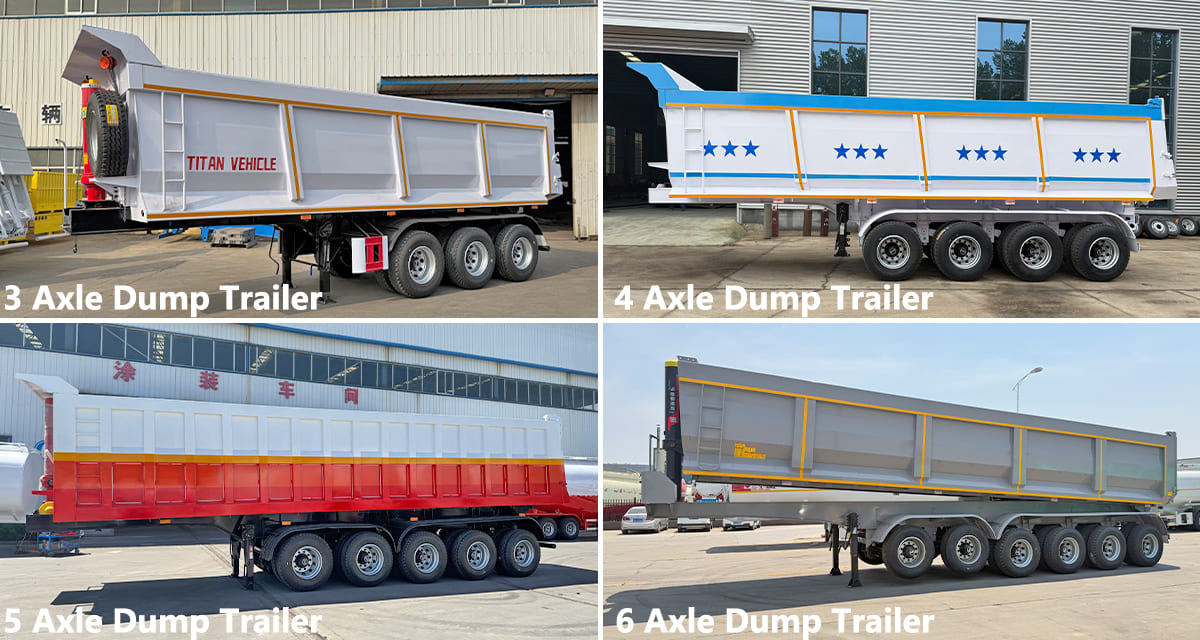 End Dump Truck Trailer for Sale in Ghana
Not every technical parameter needs to receive the same level of attention. Some specifications identify the general product category, while others determine the exact model being purchased.
For a dump truck trailer, the most useful specifications include body structure, rated payload, body volume, internal dimensions, overall dimensions, body material and hydraulic cylinder model.
3.1 Body structure identifies the product configuration
The products in this range include grid-style and U-shaped body configurations.
This information should appear directly in a quotation because a buyer may have a specific body structure in mind. It is not necessary to claim that one body type is universally stronger, more durable or more efficient than another unless supporting engineering data is available. The practical procurement point is much simpler: the body structure is part of the product identity.
A buyer ordering a dump trailer for sale should therefore specify the requested structure rather than leave the choice entirely to the supplier. For buyers in Ghana, clearly stating the body type can also make communication easier when contacting several manufacturers or distributors.
3.2 Internal dimensions explain the available space
Body volume is an important specification, but internal dimensions provide additional information about how the space is arranged.
The supplied configurations include an internal body size of 8.3 × 2.37 × 1.8 m as well as an 8.8 × 2.37 × 1.6 m configuration. For buyers, this means that a statement such as “I need a 35 m³ dump trailer” may not be enough if specific body dimensions are important to the application. The buyer can request the internal dimensions together with the stated volume. This gives a clearer picture of the physical configuration and creates another point for checking whether supplier quotations actually refer to the intended product.
A dump trailer for sale should therefore be evaluated through both volume and dimensions when cargo space is an important part of the purchasing decision.
3.3 Body material should be included in the quotation
The supplied products use Q345B and T700 body materials.
Material designation is useful because it provides a clear technical item that can be included in a quotation or purchase specification.
However, the available product information does not provide a full engineering comparison between the materials. A buyer should therefore avoid assuming a specific service-life, weight or strength advantage without supporting technical data. The more reliable purchasing approach is to state the required material clearly and verify that the supplier's quotation uses the same designation.
For an end dump truck, this can be especially useful when product names are similar but technical configurations differ.
3.4 Overall dimensions help confirm the exact product
Overall dimensions are another important way to identify the actual trailer configuration.
The supplied products have different overall lengths and heights. Those dimensions should therefore be recorded in the technical inquiry instead of relying only on a model name or product photo. A buyer may find a large number of listings while searching for an end dump truck, but the final purchase should be based on the specified dimensions. This helps the buyer verify that the trailer being quoted is the same type of product that was originally requested.
3.5 Hydraulic cylinder model should not be omitted
The hydraulic cylinder model is also part of the technical configuration.
The supplied specifications include TITAN 196 and TITAN 214 hydraulic cylinders. Those model numbers should be retained in the quotation so that the buyer can verify the requested configuration. At the same time, a buyer should not infer additional hydraulic performance that has not been provided.
The purpose of listing the cylinder model is configuration accuracy, not to create unsupported performance claims. For a dump trailer for sale, this is another example of why a complete quotation is more useful than a general product name.
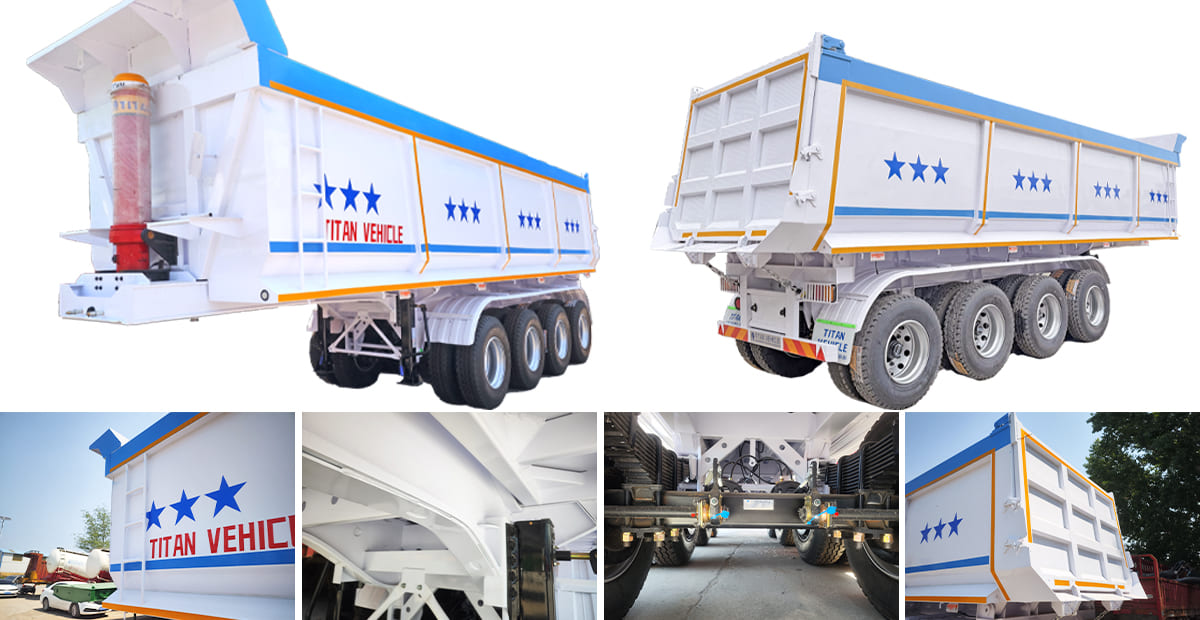 End Dump Truck Trailer for Sale in Ghana
For buyers in Ghana, choosing an end dump truck is often less about finding the largest available trailer and more about making sure the trailer specification fits the intended transport work. This is especially important when purchasing from an overseas supplier. The buyer may first find a dump trailer for sale through an online search, but the listing itself does not always provide enough information to determine whether the trailer is the right configuration.
The most useful approach is to move from a general product search to a clearly defined purchasing requirement.
4.1 The same trailer category can serve different requirements
A dump trailer is a broad product category. Within that category, buyers can encounter different payload capacities, body volumes, body structures and hydraulic configurations.
For example, a buyer who simply searches for an end dump truck may receive several products that look similar in photographs but are configured differently.
4.2 Confirm body volume and internal dimensions
After identifying the required payload, the buyer should confirm body volume and dimensions.
A request for a 35 m³ dump trailer for sale identifies one important characteristic but may still leave room for different payload or hydraulic configurations. Likewise, a request for a 60-ton dump truck trailer does not automatically define the body structure. Combining payload, body volume and dimensional requirements gives the supplier a much clearer product definition.
4.3 Ask suppliers to quote against a clear specification
A Ghanaian buyer can improve an inquiry by listing the main requirements directly.
For example:
Three axles, required rated payload, required body volume, required body structure, overall dimensions, internal body dimensions, body material and hydraulic cylinder model.
These details are already part of the available product information and can be used to describe the required configuration.
The purpose is not to make the inquiry unnecessarily long. The purpose is to give the supplier enough information to quote the intended dump trailer instead of selecting a different model based on a general product name.
4.4 Do not send only a broad product name
A more useful inquiry is: “I need a three-axle end dump trailer with a rated payload of 60 tons and a 35 m³ body.” The buyer can then add the required body structure, dimensions, material and hydraulic configuration. This approach can reduce back-and-forth communication and make it easier for the supplier to identify the correct end dump truck configuration.
4.5 Batch purchasing requires consistent specifications
When a fleet operator or distributor in Ghana purchases multiple units, configuration consistency becomes even more important. The buyer should establish a standard technical specification before asking suppliers to quote. Without a common specification, two suppliers may both offer a 60-ton dump trailer, while the actual body configuration and material are different. For fleet procurement, the focus should therefore be on consistent technical requirements rather than similar product titles.
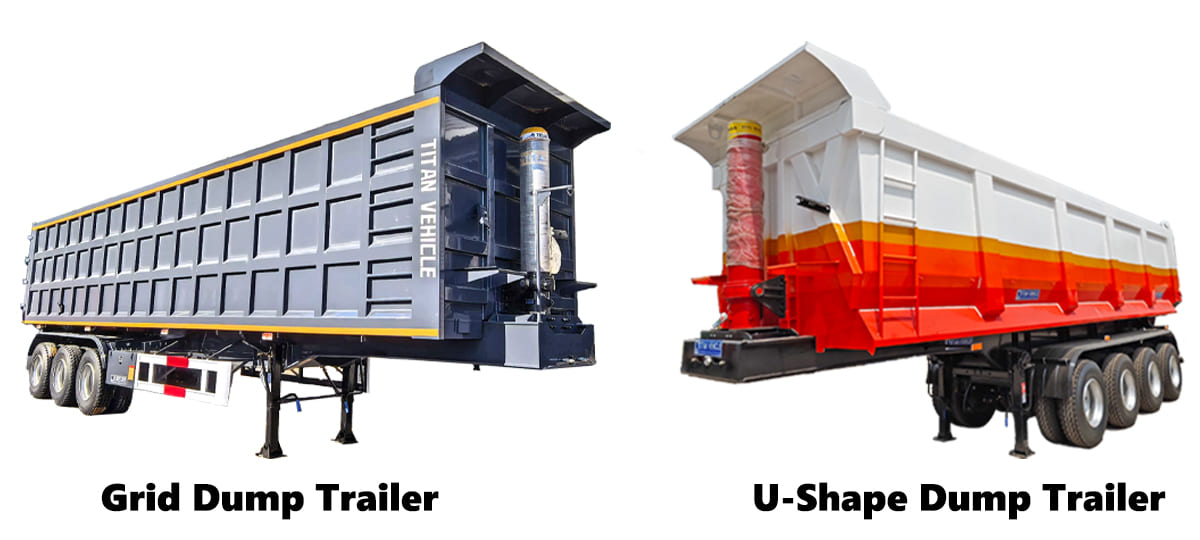 End Dump Truck Trailer for Sale in Ghana
When searching for a dump trailer for sale, buyers often start with the price because it is the easiest number to compare. In practice, however, the quoted price is only meaningful after the buyer understands what is included in that price.
A lower quotation does not necessarily represent a different product, and a higher quotation does not automatically mean a better one. The first question should be: what exact configuration does each supplier's price represent?
For a buyer in Ghana, this is particularly important when comparing quotations from different trailer manufacturers or exporters. Suppliers may use the same terms, such as dump trailer, dump truck trailer, or end dump truck, while quoting different technical configurations.
5.1 What actually creates a difference in quotation price?
The most useful way to read a supplier quotation is to look for the specifications that define the product itself. Rated payload, body volume, body structure, dimensions, material and hydraulic configuration all form part of the quoted trailer. When one of these requirements changes, the buyer is no longer comparing exactly the same specification.
This is why the question should not simply be: “Which supplier has the lower price?”
It should first be: “Are both suppliers quoting the product I asked for?”
Once the answer is yes, the price becomes much more meaningful.
5.2 Compare the specification, not the sales wording
Commercial descriptions are useful for finding products, but they are not reliable enough for final quotation comparison.
A supplier may describe a product as a dump trailer, another as a dump truck trailer, and another as an end dump truck. These names may all refer to the same general category, but the actual technical configuration still needs to be confirmed.
The quotation should therefore be read as a specification rather than as a marketing description. A useful comparison starts with the product requirements and then checks whether each supplier has quoted against those requirements.
5.3 What should be fixed before asking for a price?
Before requesting a dump trailer for sale quotation, the buyer should decide which specifications are fixed and which can remain flexible.
For example, rated payload and body volume may be essential requirements. Body structure may also be fixed if the buyer already knows which design is needed.
Once those core requirements are established, the supplier can quote the corresponding configuration instead of choosing a model independently.
This approach is more efficient than asking several suppliers for their “best dump trailer price” and only comparing the numbers afterward.
5.4 The cheapest quotation is not always the easiest quotation to evaluate
A very low quotation may look attractive at first, but it can become difficult to evaluate when the technical description is incomplete.
If the quotation does not clearly state the payload, body volume, structure or other major specifications, the buyer may not know whether the quoted product actually matches the requested end dump truck.
A clear quotation, even before the final commercial negotiation, gives the buyer a stronger basis for understanding what is being offered.
The goal is not to avoid low prices. The goal is to make sure the price belongs to the right product.
5.5 What a useful quotation should look like
For an international buyer, a useful quotation should allow the product to be identified without relying on assumptions.
The buyer should be able to see the product type, rated payload, body volume, body structure, dimensions, material and hydraulic configuration.
This is particularly useful when buying an end dump truck from overseas because the buyer may not be able to inspect the physical trailer before placing the order.
A clear technical description reduces uncertainty at the quotation stage and creates a reference for later order confirmation.
 End Dump Truck Trailer for Sale in Ghana
What is an end dump truck trailer?
An end dump truck trailer is a semi-trailer designed to transport bulk materials and unload them from the rear by hydraulically tipping the body. The products discussed in this guide use rear-dumping configurations.
What payload options are available?
The supplied configurations include 60-ton and 80-ton rated payloads. There are two 60-ton configurations and one 80-ton configuration in the product range discussed here.
What body volumes are available?
The listed products include 35 m³ and 33 m³ body configurations. Buyers should consider body volume together with payload, body structure and dimensions when choosing a dump trailer.
What is the difference between the 60-ton and 80-ton configurations?
The 60-ton and 80-ton grid-style configurations both have a stated body volume of 35 m³. The 80-ton version uses a TITAN 214 hydraulic cylinder and is identified in the supplied product information as suitable for adverse road conditions.
What is the U-shaped dump trailer configuration?
The U-shaped configuration is a three-axle rear-dump trailer with a rated payload of 60 tons and a stated body volume of 33 m³. Its body material is T700, its internal dimensions are 8.8 × 2.37 × 1.6 m and it uses a TITAN 196 hydraulic cylinder.
How should buyers in Ghana request a dump trailer for sale?
A buyer should clearly state the required payload, body volume, body structure, dimensions, material and hydraulic configuration. This allows the supplier to quote a specific product instead of responding only to the general phrase dump trailer for sale.
Can you provide an exact dump trailer price in Ghana?
An exact price cannot be stated from the supplied information because no product selling price was provided. The buyer should request a quotation based on the required configuration and compare offers using the same technical specifications.
Which specification should be checked first?
Rated payload is a useful first filter, but it should not be the only criterion. A complete dump trailer for sale requirement should also confirm body volume, body structure, dimensions, material and hydraulic configuration.
Add: Nii Nortei Nyanchi St, Accra, Ghana
Marketing Manager: Hitomi Zhang
Mobile: 8615853176773