
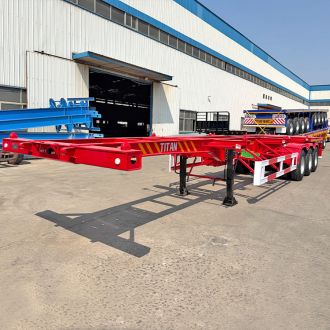
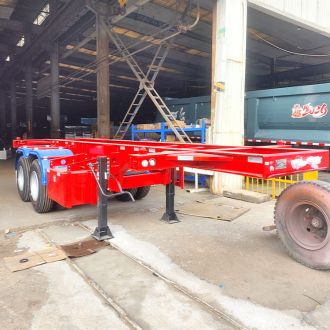
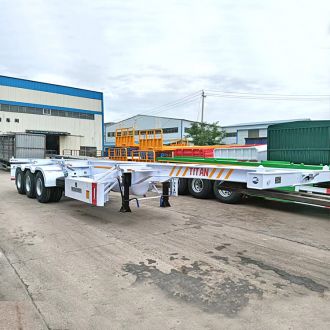
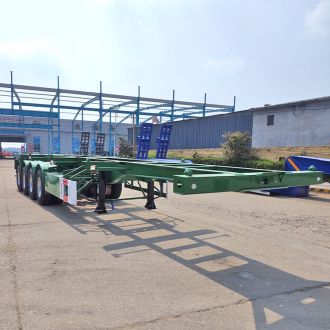
Container transportation requires more than a tractor truck and a suitable road route. Transport operators also need a trailer chassis that matches the container size, secures the container correctly, and performs reliably during repeated loading, unloading, and road transportation. For companies moving shipping containers between ports, warehouses, distribution centers, and inland destinations, a skeleton trailer is a practical option.
A skeleton trailer is an open-frame semi-trailer designed primarily to carry shipping containers. Unlike a conventional flatbed trailer, it uses a chassis structure with container locking positions rather than a continuous cargo platform. The container rests on the designated support points and is secured by compatible twist locks. This structure makes skeleton trailers particularly suitable for dedicated container transportation.
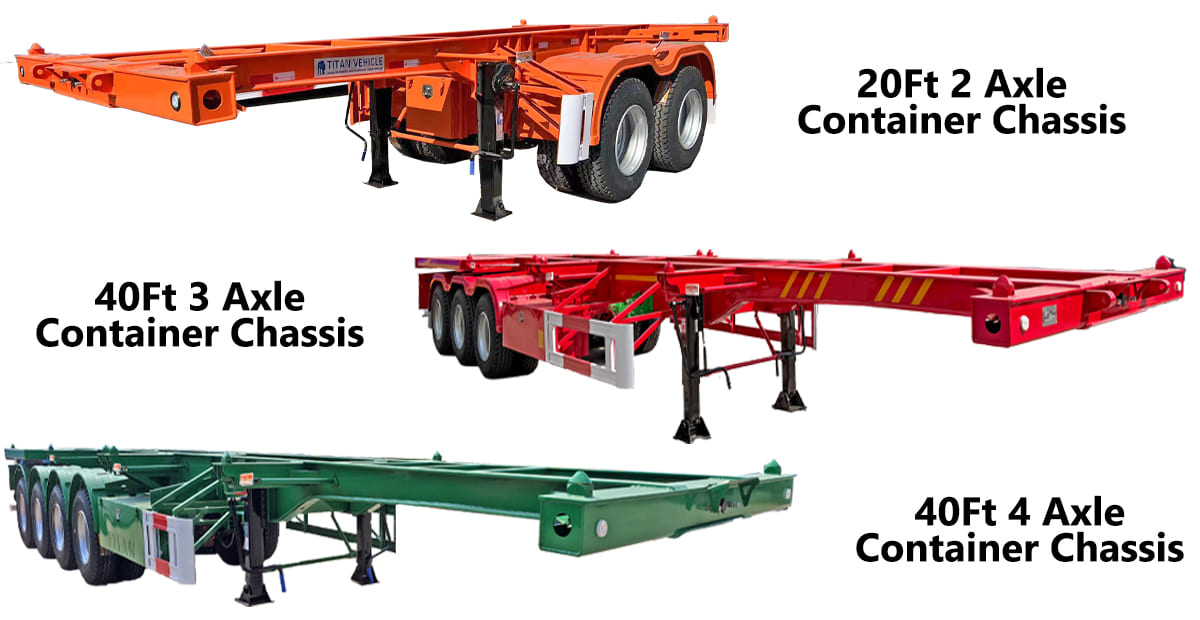
For transport companies in Ghana, choosing the correct trailer configuration depends on the container sizes handled every day. A 20 ft container trailer is suitable for operations focused on 20-foot containers, while a 40ft container trailer is designed around the dimensions and locking positions required for 40-foot containers. Operators handling both sizes may need a configuration with appropriately positioned locks for flexible container transport.
The demand for container transportation in Ghana involves different types of logistics operations. Containers may move from port terminals to warehouses, from importers to distribution facilities, or between commercial and industrial locations. A suitable container chassis helps transport companies organize these movements without repeatedly transferring cargo out of its shipping container. The same container can remain sealed during transportation, reducing unnecessary handling.
When comparing container trailers, buyers should look beyond the overall length. Frame strength, axle configuration, suspension, tires, braking equipment, container-lock positions, and compatibility with the tractor truck all influence whether the trailer is suitable for the intended operation. These factors are especially important for a fleet that operates frequently and needs to minimize avoidable downtime.
A container trailer for sale should therefore be evaluated according to its actual working requirements, rather than price alone. For example, a company transporting mainly 20-foot containers may prioritize correct lock positioning and compatibility with its tractor fleet. A company handling regular 40-foot container movements may focus more closely on the chassis dimensions, axle arrangement, and load distribution associated with its normal cargo.
TITAN offers container transportation solutions that can be configured according to customer requirements. Before selecting a model, buyers in Ghana should confirm the container sizes, typical cargo weights, tractor specifications, road routes, and applicable local transport requirements. This information provides a more useful basis for selecting a 20 ft container trailer, a 40ft container trailer, or a configuration intended to handle both container sizes.
 20 40Ft Container Trailers for Sale in Ghana
The main difference between a 20 ft container trailer and a 40ft container trailer is the container length each configuration is designed to accommodate. However, the best option for a transport company in Ghana also depends on the frequency of each container size, the operating route, and whether the fleet needs to handle different container combinations.
A 20 ft container trailer is a practical choice for operators whose work is concentrated on 20-foot containers. The shorter container footprint may fit a particular transport operation better, but buyers still need to confirm the complete trailer dimensions, axle arrangement, tractor compatibility, and rated load. The container's gross weight and the applicable road limits remain important regardless of its physical length.
A 40ft container trailer is intended for 40-foot containers and is relevant to businesses that frequently transport larger standard shipping containers. The longer chassis must have suitable container-lock positions and an axle arrangement appropriate for the intended loads. Buyers should not assume that every trailer marketed as a 40ft container trailer can carry two 20-foot containers without checking the locking positions and permitted configuration.
Some transport companies need flexibility rather than a trailer dedicated to only one container size. In such cases, a compatible multi-position chassis can be considered. Depending on its design, it may support a 40-foot container or two 20-foot containers. This capability must be confirmed against the actual chassis drawing, twist-lock positions, load distribution, and manufacturer-approved configuration.
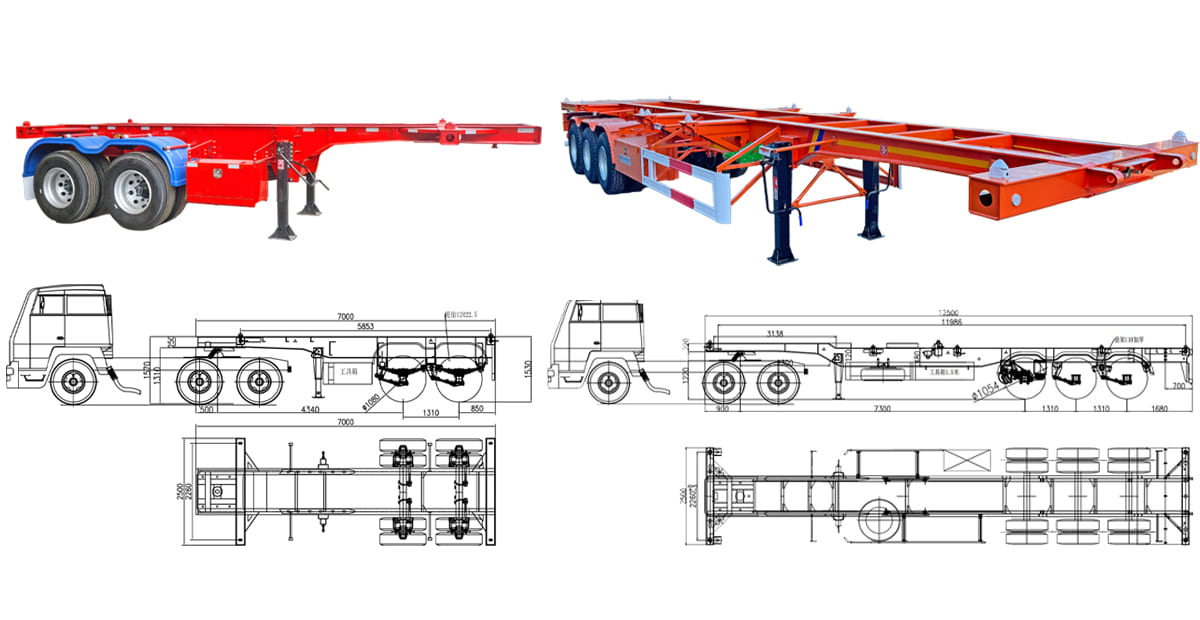
Container trailer configuration comparison:
| Specification | 20 ft Straight Beam Skeleton Trailer | 40 ft Straight Beam Skeleton Trailer |
|---|---|---|
| Overall Dimensions (L×W×H) | 7,000 × 2,480 mm | 12,500 × 2,480/2,500 mm |
| Deck Height | Approx. 1,400 mm | Approx. 1,560 mm |
| Main Beam | Height 500 mm; Upper/Lower flange width 160/160 mm; Upper/Lower flange thickness 12/14 mm; Web 6 mm | Height 500 mm; Upper/Lower flange width 160/160 mm; Upper/Lower flange thickness 14/16 mm; Web 8 mm |
| Kingpin | 90# assembled type | |
| Container Locks | 4 sets | 12 sets |
| Running Gear | Suspension: 70 pin, side wall 8 mm; Landing gear: 28-ton interlocking; Leaf spring: 10 pcs (90×13); Axle: 13-ton, with ABS, manual slack adjuster; Tire: 12R22.5-18PR; Rim: 9.0-22.5-16 mm | |
The table below focuses on decisions that affect day-to-day operations in Ghana. It distinguishes the container size from the chassis features that buyers should verify before placing an order.
This comparison shows why container length should be the starting point, not the only purchasing criterion. A container trailer for sale may appear suitable in a product photograph, but its actual usefulness depends on the lock positions, rated capacity, and approved operating configuration.
For example, a logistics operator in Ghana that regularly receives 20-foot containers should first establish whether a dedicated 20 ft container trailer will meet its dispatch schedule. If the company also handles 40-foot containers, a compatible multi-position chassis may provide greater flexibility. The decision should be based on actual transport frequency rather than the assumption that one trailer configuration is automatically suitable for every container.
A company that mainly moves 40-foot containers may find a dedicated 40ft container trailer easier to standardize across its fleet. Standardizing trailer specifications can simplify driver training, inspection procedures, and spare-parts planning. Nevertheless, the trailer should still be matched to the tractor unit, container weights, and operating conditions.
When requesting quotations for container trailers, Ghanaian buyers should ask the supplier to confirm the trailer's usable container positions and provide a technical drawing. This is more reliable than choosing a model solely because its name contains “20 ft,” “40ft,” or “container trailer.”
 20 40Ft Container Trailers for Sale in Ghana
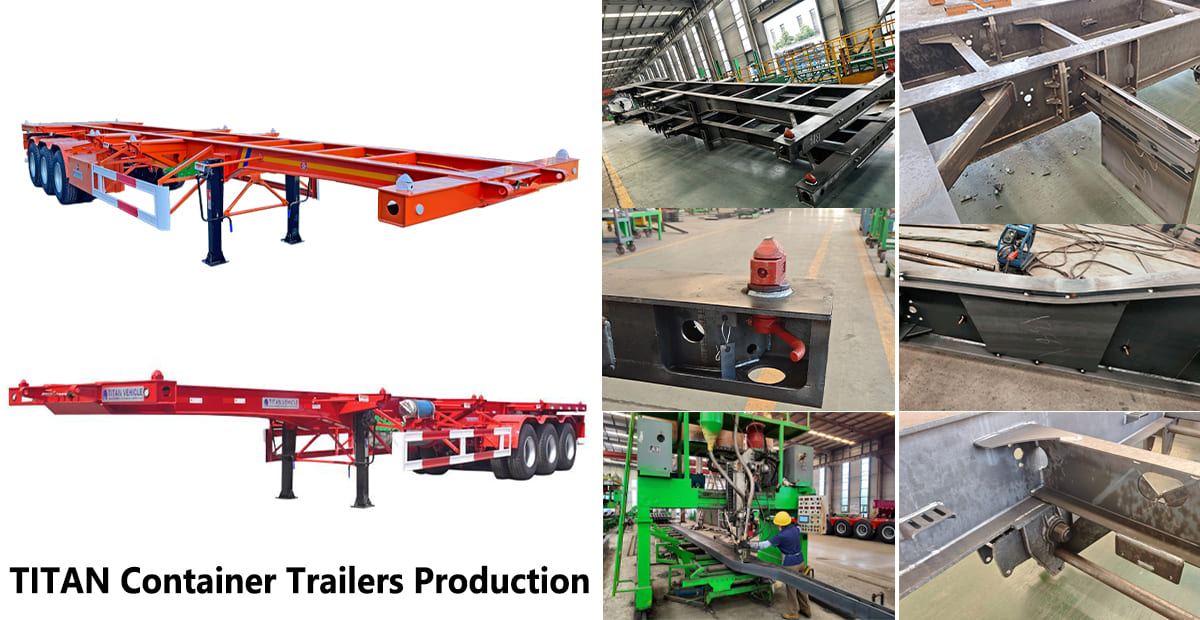
The suitability of container trailer for sale depends on the interaction between the frame, running gear, locking system, and tractor truck. Two trailers intended for the same container size may differ considerably in their axle arrangement, suspension type, structural design, and permitted load. These differences affect both initial purchase cost and long-term operating requirements.
Main frame and structural design
The main frame supports the container through designated structural points. Its design must accommodate the intended load and transfer forces through the chassis and running gear. Buyers comparing a 20 ft container trailer with a 40ft container trailer should confirm the specified frame dimensions, structural materials, and rated capacity instead of assuming that longer automatically means stronger.
Steel selection, frame geometry, welding quality, and reinforcement details are all relevant to the trailer's performance. A supplier should be able to explain the proposed structural configuration and provide drawings or specifications for the model being quoted. Any claimed load rating should be checked against the actual trailer configuration and applicable operating requirements.
Container locks and positioning
Twist locks secure the container to the chassis at compatible corner castings. Their locations must correspond to the container size and the trailer's approved loading arrangement. If a buyer requires one chassis to transport both 20-foot and 40-foot containers, the supplier must confirm that the available locking positions support both arrangements.
This is an important check for container trailers intended for mixed transport work in Ghana. Incorrectly assuming that a chassis can carry different container sizes may create operational problems, even when the trailer's overall length appears adequate. Buyers should request a drawing that identifies the locking positions and the configurations approved for use.
 20 40Ft Container Trailers for Sale in Ghana
Axles, suspension, tires, and brakes
Axle configuration should be selected according to the intended payload, weight distribution, tractor compatibility, and road requirements. More axles do not automatically make every trailer the better choice; the complete design must be suitable for the loads being carried. The supplier should specify the axle ratings and explain the recommended arrangement for the intended operating conditions.
Suspension selection also matters. Mechanical suspension may suit fleets that prioritize a familiar, serviceable configuration, while other suspension options may be considered according to the required ride characteristics, maintenance resources, and operating conditions. Buyers should compare the complete package rather than evaluating suspension type in isolation.
Wheel and brake specifications should be selected according to the trailer's axle configuration and expected operating weight. For a container trailer for sale in Ghana, buyers should ask about the tire specification, brake system, availability of replacement parts, and the inspection and maintenance procedures recommended by the manufacturer. These details can affect vehicle uptime and operating expenses throughout the trailer's service life.
Tractor compatibility and overall dimensions
A trailer is only useful when it works with the tractor truck assigned to pull it. Before purchasing a 20 ft container trailer or a 40ft container trailer, confirm the tractor's fifth-wheel height, coupling compatibility, available pulling capacity, electrical connections, and braking connections. The combination must also satisfy applicable vehicle and road requirements.
Overall container trailer for sale dimensions are equally important when planning routes, parking, turning, and loading operations. Buyers should verify the complete dimensions of the quoted chassis rather than relying only on the nominal container length. Where operations involve tight warehouse entrances, terminal access points, or limited turning areas, the tractor-trailer combination should be assessed as a whole.
Configuration checklist for Ghanaian buyers
A detailed specification sheet is especially useful when comparing multiple container trailers. It allows a buyer to compare like with like and identify whether a lower quotation reflects a different configuration, equipment specification, or scope of supply. It also gives the supplier enough information to recommend a suitable model rather than providing a generic price.
 20 40Ft Container Trailers for Sale in Ghana
For transport operators in Ghana, the right trailer should reflect the routes and container movements that generate revenue. A fleet moving containers between a port terminal and an inland warehouse may have different requirements from a company moving containers between distribution centers or supporting industrial cargo operations. Identifying the main use case helps narrow the options before comparing prices.
How to Match Container Trailers to Transport Operations in Ghana
When selecting container trailers in Ghana, transport operators should consider the entire journey from the loading point to the final delivery location. A container may travel between a port terminal, a storage yard, a distribution warehouse, or an inland industrial facility. Each operation can involve different loading frequencies, cargo weights, road conditions, and access limitations. The right chassis configuration depends on the container sizes handled in daily operations, with options ranging from single-size designs to container trailer for sale offering multiple approved container-lock positions.
For fleet operators handling a large number of 20-foot containers, a 20 ft container trailer can help standardize daily dispatch operations around a specific container size. Businesses that mainly transport 40-foot containers may prefer a 40ft container trailer configured for their regular cargo requirements. Companies serving different customers may need both types, or they may evaluate a flexible chassis that can accommodate different container lengths. Before choosing the latter option, buyers should confirm the exact twist-lock positions, permitted container arrangements, and load distribution with the manufacturer.
When evaluating container trailers for sale in Ghana, buyers should also assess servicing needs and the availability of replacement parts over the container trailer for sale's working life. Frequent loading cycles and regular road operation make routine inspection of the chassis, tires, brakes, suspension, and container locks important. Buyers should also consider whether commonly required replacement parts are available through their supply arrangements and whether their maintenance team can service the selected configuration. A trailer that matches the fleet's working pattern and maintenance capabilities may help reduce avoidable interruptions.
Port-to-warehouse and inland container transport
Port-related logistics often involves moving loaded or empty containers between terminals, storage yards, warehouses, and customer facilities. In these operations, a suitable container chassis enables the container to be transported as a single unit without transferring its contents to another vehicle. The trailer configuration should be matched to the container sizes commonly handled by the operator.
For businesses in Ghana, a dedicated 20 ft container trailer may make sense when 20-foot containers dominate the workload. A dedicated 40ft container trailer may be more appropriate when 40-foot containers account for most dispatches. Companies that handle a mixture of container sizes should compare the costs and practical benefits of a flexible chassis against the simplicity of a dedicated configuration.
Industrial and commercial container movements
Container trailers may also support movements to factories, distribution facilities, construction-related businesses, and commercial storage locations. The correct choice depends on the container size, cargo weight, loading arrangement, route, and access conditions. A container trailer for sale is designed primarily around container transport, so other cargo should only be carried when the trailer is specifically suitable and the load can be secured correctly.
A company planning frequent movements over longer distances should pay particular attention to axle ratings, tires, suspension, braking equipment, and serviceability. For operations involving frequent terminal entry and exit, the ability to inspect, maintain, and service the running gear is also important. The aim is to select container trailers that fit the actual work rather than adding features that the operation rarely needs.
What determines the price of a container trailer for sale?
There is no single price that applies to every container trailer. A quotation depends on the chassis size, axle configuration, rated capacity, steel specification, suspension, tires, braking system, container-lock arrangement, optional equipment, and other agreed requirements. Shipping, insurance, import charges, and local delivery arrangements may also affect the final cost to the buyer.
A 20 ft container trailer and a 40ft container trailer may have different prices because their dimensions and structural configurations can differ. However, the price difference cannot be determined from container length alone. A customized multi-position chassis, for example, should be assessed according to its actual frame design and permitted container arrangements.
When requesting a container trailer for sale quotation from TITAN, buyers in Ghana should provide the intended container size, typical gross container weight, expected transport frequency, tractor specifications, preferred axle configuration, and any particular operating requirements. This allows the supplier to prepare a more relevant quotation and clarify which specifications are included.
It is also useful to compare the total cost of ownership rather than only the initial price. A container trailer for sale with a suitable specification, accessible replacement parts, and a practical maintenance plan may be more economical over time than a lower-priced model that does not fit the fleet's workload. Buyers should evaluate the frame, running gear, warranty terms, delivery conditions, and after-sales support as part of the same purchasing decision.
Delivery and preparation for operation
Before production or dispatch, the buyer and supplier should confirm the technical drawing, final specification, agreed price, delivery terms, payment terms, and expected production schedule. Any changes to the trailer after approval should be documented to avoid misunderstandings about the delivered configuration.
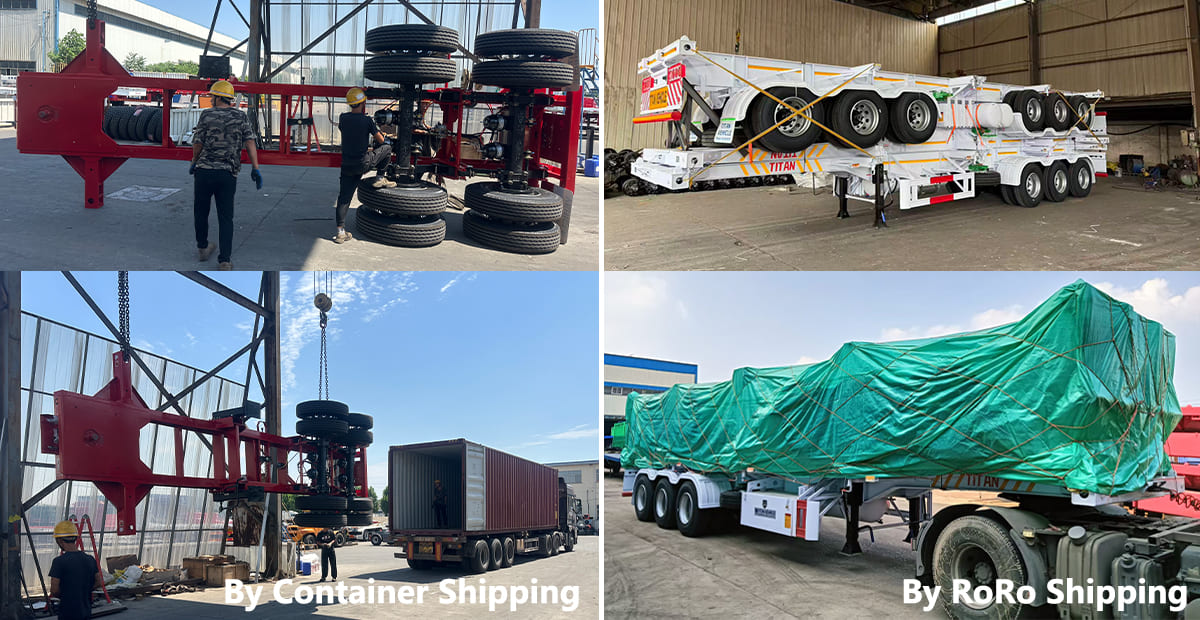
For container trailers shipped to Ghana, transport planning should include the shipping arrangement, export documentation, import procedures, and the requirements applicable to the receiving location. The buyer should confirm current local requirements with the relevant authorities or a qualified customs professional rather than relying on a general product description.
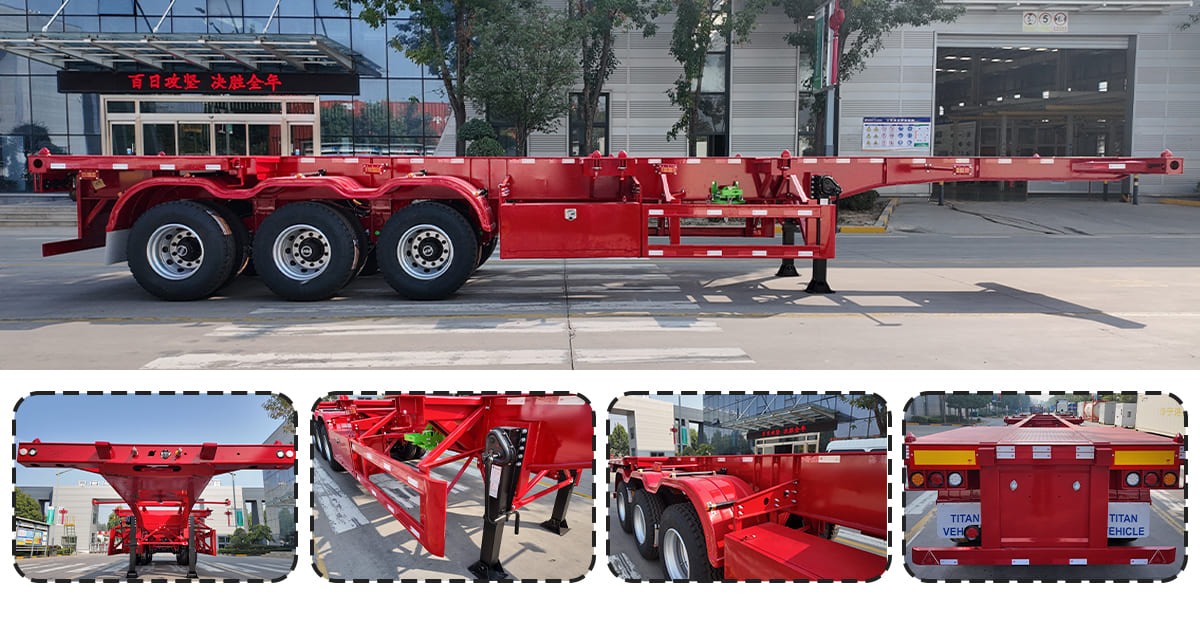
After delivery, the trailer should be inspected before entering regular service. The inspection should cover the frame, welds, twist locks, axles, tires, brakes, lights, and coupling points. Drivers and maintenance personnel should understand the approved loading configuration and the correct procedures for securing containers.
For companies evaluating container trailers in Ghana, this preparation helps turn a purchase into a workable fleet solution. The objective is not simply to obtain a 20 ft container trailer or a 40ft container trailer, but to obtain equipment that matches the transport operation, can be maintained appropriately, and complies with the applicable requirements.
 20 40Ft Container Trailers for Sale in Ghana
What is a skeleton trailer used for?
A skeleton trailer is an open-frame semi-trailer primarily designed to transport shipping containers. It uses container locks positioned to match the relevant container corner castings. In Ghana, it can be used for suitable container movements between ports, warehouses, distribution facilities, and inland destinations.
How do 20 ft and 40ft container trailers differ?
The main distinction is the container length each chassis is configured to carry, making each option suitable for different transportation requirements. The chassis dimensions and twist-lock positions must match the intended container. Some configurations can accommodate both sizes, but the supplier must confirm the approved locking arrangements and loading conditions.
Can one container trailer carry both 20-foot and 40-foot containers?
Some container chassis are designed with multiple locking positions that can support different container arrangements. However, this is not a universal feature. Before buying container trailers for mixed operations in Ghana, request a technical drawing and confirmation that the proposed chassis is approved for the required configurations.
What affects the price of a container trailer for sale in Ghana?
The main factors include trailer dimensions, axle configuration, rated capacity, structural materials, suspension, tires, brakes, twist locks, optional equipment, and customization. Shipping and import-related expenses can also affect the final landed cost. For an accurate quotation, provide the supplier with your container sizes, cargo weights, tractor details, and operating requirements.
How do I choose between different container trailers for my fleet?
Start by reviewing the container sizes your business transports most frequently. Then compare chassis dimensions, lock positions, axle ratings, suspension, tractor compatibility, maintenance requirements, and the total purchase cost. A dedicated 20 ft container trailer or 40ft container trailer may suit a predictable workload, while a verified multi-position configuration may be worth considering for mixed container operations.
What should I check before ordering container trailers from TITAN?
Confirm the technical drawing, container-lock layout, rated capacity, axle and suspension specifications, tire and braking configuration, tractor compatibility, warranty terms, production schedule, shipping arrangements, and documentation. Buyers in Ghana should also verify the applicable import and road-use requirements before finalizing the order.
Add: Nii Nortei Nyanchi St, Accra, Ghana
Marketing Manager: Hitomi Zhang
Mobile: 8615853176773